Ashwagandha

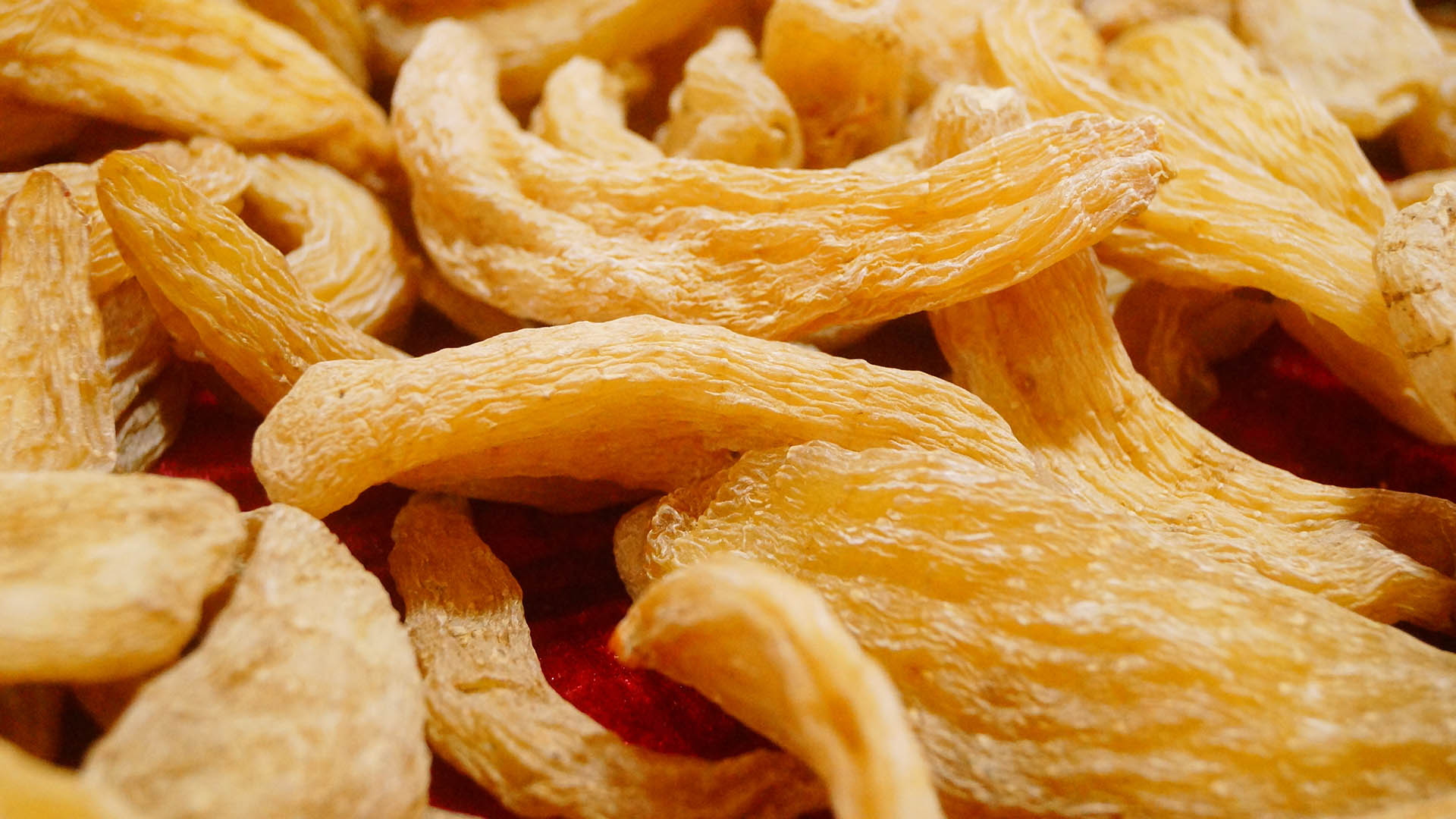
Ashwagandha (Withania somnifera L. Dunal) is a perennial plant in the Solanaceae family, native to the arid regions of the Indian subcontinent, North Africa and the Middle East. It is considered one of the main rasayanas of Ayurvedic medicine — a category of traditional remedies used to promote longevity, energy and mental and physical endurance-with a documented history of use of more than 3,000 years. The Sanskrit name literally means “horse smell”-a reference to both the root’s characteristic aroma and the tradition that associates it with equine strength and vitality.

Today, ashwagandha is one of the most studied botanically derived functional ingredients in the world. In the European and North American markets, its growth has been steady over the past decade, driven by demand for natural solutions for stress management, cognitive support, and physical recovery. It is classified as an adaptogen: a substance of natural origin that promotes the body’s ability to respond to stresses of various kinds — physical, mental, and emotional — without producing net stimulant or sedative effects.

Composition and active ingredients: the Withanolides

The most widely used part of the plant is the root, although leaves and berries are also used in some traditions. The main bioactive compounds are the Withanolides — natural steroid lactones found almost exclusively in the Withania genus — among which Withaferin A and Withanolide A are the most studied.

Quality extracts for supplemental use are standardized by Withanolide content, generally between 1.5% and 10%. Standardization is a critical element in ingredient selection: extracts that are not standardized or are obtained from different parts of the plant (particularly the leaves, which contain Withaferin A in higher concentrations than the root) may have safety and activity profiles that differ from those documented in clinical trials.

Popular patented extracts in formulation include KSM-66 — root only extract using a milk-based extraction process in accordance with Ayurvedic principles — and Sensoril, obtained from roots and leaves using an aqueous process. The two extracts differ in composition and the body of supporting clinical studies.

Mechanism of action: the HPA axis and beyond

Ashwagandha’s main mechanism of action involves modulation of the hypothalamic-pituitary-adrenal (HPA) axis — the central neuroendocrine system that regulates the stress response. Under chronic stress conditions, the HPA axis produces elevated levels of cortisol, the main glucocorticoid of stress, with negative consequences on metabolism, immune system, sleep quality, and cognitive function.

Clinical studies show that supplementation with standardized extracts of Ashwagandha can help reduce cortisol levels in people with chronic stress. A 2023 meta-analysis found an average fasting cortisol reduction of about 15–30% from baseline values in stressed adults, with a landmark study conducted with 600 mg/day of KSM-66 for 60 days documenting a reduction from 15.7 to 11.3 µg/dL in the treated group, compared to little change in the placebo group.

Documented mechanisms also include:

  • GABAergic activity — Withanolides interact with GABA-A receptors, the main inhibitory system of the central nervous system, with anxiolytic and relaxation-promoting effect without impairing alertness.
  • Antioxidant Activity — Ashwagandha compounds exert antioxidant action in nerve tissues, helping to reduce Oxidative Stress associated with chronic inflammation and cellular aging.
  • Modulation of the Inflammatory Response — Withaferin A shows inhibitory activity on NF-κB, a major regulator of the inflammatory response.
  • Support Thyroid Function — some studies document increased T3 and T4 levels in subjects with subclinical hypothyroidism, with implications for energy metabolism.

Key clinical evidence

The body of clinical evidence on ashwagandha continues to grow, with randomized controlled trials and meta-analyses published in recent years. The areas with the strongest evidence are:

  • Stress and Anxiety — the most documented effect. Multiple clinical studies show significant reductions on validated scales for perceived stress (PSS) and anxiety symptoms (DASS, Hamilton Anxiety Scale) compared to placebo, with dosages between 240 and 600 mg/day of standardized extract for 8-12 weeks.
  • Sleep Quality — A 2021 meta-analysis (Cheah et al., PLoS ONE) documented significant improvement in sleep quality, falling asleep latency, and morning alertness in adults with mild to moderate sleep disorders.
  • Physical Performance and Muscle Recovery — Studies in active adults show increased muscle strength (1RM) and improved post-exercise recovery with doses of 600 mg/day for 8 weeks, with effects on VO₂max and reduction in markers of muscle damage.
  • Cognitive Function — Preliminary evidence on improvement of working memory, processing speed, and attention in adults with chronic stress.

Gastrodia elata and Ashwagandha: two botanical adaptogens compared

Ashwagandha shares with Gastrodia elata membership in the category of botanically derived adaptogens with documented neuroprotective properties. However, the two plants act through distinct mechanisms: while Ashwagandha primarily modulates the HPA axis and the GABAergic system, Gastrodia elata acts through Gastrodine, a glycoside with specific antioxidant and neuroprotective properties on nerve tissue. Their association in formulations for cognitive health and mental well-being is a growing area of interest in nutraceutical research.

The forms available for formulation

Ashwagandha is available in several forms for supplement formulation:

  • Dry extract standardized in Withanolides — the most widely used form in supplements. It allows a precise and reproducible dose of active ingredients. Standardization can refer to total Withanolides or to specific markers (Withaferin A, Withanolide A). Available in Capsules, tablets and powders.
  • Patented extracts (KSM-66, Sensoril, Shoden) — extracts with specific production processes and dedicated body of clinical studies. They allow technical claims on the formulation based on proprietary research. Shoden is particularly concentrated (35% Withanolide glycosylates) and active at very low doses (120 mg/day).
  • Root Powder — traditional, less standardized form. Used in formulations that enhance the whole-herb approach and Ayurvedic tradition. Requires higher doses (typically 3-6 g/day) than concentrated extracts.

The European regulatory framework: an evolving situation

The European regulatory environment for ashwagandha is currently under review. This is something that those who formulate or market supplements based on this plant need to monitor carefully.

In September 2024, the German Federal Institute for Risk Assessment (BfR) issued Notice 39/2024, recommending caution in the intake of ashwagandha preparations by the general population in light of case reports of hepatotoxicity and the insufficiency of available data for a definitive risk assessment. The BfR indicated that children, pregnant and lactating women, and people with liver disease should avoid taking it.

At the European level, EFSA and national food safety authorities in several member states are actively reviewing the regulatory status of ashwagandha in food supplements. A procedure under Article 8 of EC Reg. 1925/2006 — which can lead to restrictions on the use of an ingredient — has not been initiated at the time of this writing, but the evolving regulatory framework requires constant updating.

Ashwagandha has no EFSA-approved health claims under EC Regulation 1924/2006. Claims that can be used on labels in Italy must comply with the Ministry of Health’s guidance for botanicals, which allows traditional functional claims as long as they are non-therapeutic and not misleading.

The use of Ashwagandha is not recommended in pregnancy, during lactation and in children, due to insufficient safety data in these groups. People with liver disease, thyroid disorders, autoimmune diseases, or those on antidiabetic, immunosuppressive, sedative, or thyroid hormone medications should consult their physician before taking ashwagandha supplements. The European regulatory framework for this plant is under review: you should check for updated guidance from the relevant authorities.

Always remember that it is important to consult a health care professional before starting any new supplement or treatment.