

Adaptogens: the plants that help the body respond to stress.
There is a category of plants that do not cure a specific disease, do not lower pressure, do not increase strength. They do something more subtle and, in some ways, more difficult to measure: they help the body respond better to what puts it under pressure. They are called adaptogens. And in 2026, as mental wellness research shifts from emergency to prevention, they are becoming one of the most talked-about – and most misunderstood – functional ingredients in the nutraceutical landscape.


The term “adaptogen” is not a marketing invention. It was coined in 1947 by Soviet pharmacologist Nikolai Lazarev to describe a class of substances that can increase the body’s nonspecific resistance to physical, chemical and biological stresses, without producing marked stimulant or sedative effects. An operational definition, constructed to identify what these plants do – not what they are.
The HPA axis: where stress becomes biology
To understand how adaptogens act, we need to start with the hypothalamus-pituitary-adrenal axis – the HPA axis – the neuroendocrine system that manages the stress response. When the brain perceives a threat-real or perceived, physical or psychological-the hypothalamus releases CRH, which stimulates the pituitary to produce ACTH, which in turn stimulates the adrenal glands to release cortisol. Cortisol mobilizes energy reserves, temporarily suppresses non – urgent functions-digestion, reproduction, the immune system – and keeps the body on high alert.
Under acute conditions, this mechanism is an evolutionary masterpiece. The problem arises when stress is chronic: the HPA axis remains activated, cortisol levels remain elevated, and those “temporarily suspended” functions begin to be permanently affected. Disturbed sleep, reduced immunity, unstable mood, fatigue that won’t go away: these are the signs of a chronically overactive HPA axis.
Adaptogens act primarily on this system. They do not block the stress response — that would be counterproductive — but they modulate its intensity and duration, promoting a more rapid return to equilibrium after exposure to the stressor.
Ashwagandha: the most studied adaptogen
Among botanically derived adaptogens, Ashwagandha(Withania somnifera) has the strongest body of clinical evidence. Used for more than three thousand years in Ayurvedic medicine as rasayana — a remedy for longevity and vitality — it has entered the Western nutraceutical market with a body of evidence that few botanicals can boast: hundreds of preclinical studies and dozens of randomized controlled trials in humans.
Its active ingredients — Withanolides, natural lactone steroids found almost exclusively in the genus Withania — act on the HPA axis by reducing cortisol levels under conditions of chronic stress, modulate GABA receptors with a natural anxiolytic effect, and exert antioxidant activity in nerve tissue. The most consistent clinical results concern reduction in perceived stress, improvement in sleep quality, and support of physical performance in adult subjects under stress.
Gastrodia elata: the root of the mind
Less well-known to the general public but with an equally deep-rooted history of use, Gastrodia elata is a perennial plant in the Orchidaceae family that has been used for more than a thousand years in traditional Chinese medicine under the name Tian Ma — “Heavenly Root.” Its main active ingredient is Gastrodine, a glycoside with specific antioxidant and neuroprotective properties on nerve tissue.
Unlike Ashwagandha, which acts mainly on the systemic HPA axis, Gastrodia elata has a more neurological tissue-targeted action: it reduces oxidative stress in neurons, inhibits glutamate excitotoxicity, and shows documented protective properties in models of neurological degeneration. It is one of the ingredients in Neurose® – Encanto Nutraceutical’s cognitive support formulation.


The other Adaptogens: an ecosystem of botanists
The landscape of adaptogens goes far beyond the two already mentioned. Among those with increasing clinical evidence:
- Rhodiola Rosea — adaptogen of Siberian origin, whose main active ingredients are rosavin and salidroside. Evidence on reduction of mental and physical fatigue, improved mood and cognitive performance under stress. Particularly studied in the context of burnout and occupational fatigue.
- Eleutherococcus (Eleutherococcus senticosus) — the “Siberian ginseng,” historically the first adaptogen studied scientifically in Soviet laboratories in the 1950s. Supports physical endurance and immune response.
- Panax Ginseng (Panax ginseng) — among the best-known adaptogens in the West. Ginsenosides are primarily responsible for effects on energy, cognition and stress modulation. To be distinguished from American and Siberian ginseng by activity profile.
- Adaptogenic Medicinal Mushrooms — Lion’s Mane(Hericium erinaceus), Reishi(Ganoderma lucidum) and Cordyceps are gaining increasing attention for their adaptogenic and neuroprotective properties. Lion’s Mane stimulates Nerve Growth Factor (NGF) synthesis, with implications for long-term cognitive health.
The correct perimeter: Adaptogen is not drug
A necessary clarification, especially in a market where the term “adaptogen” is in danger of becoming an empty promotional label. Adaptogens are supplements of botanical origin — not drugs. They act on normal physiological functions, supporting the body’s resilience; they do not treat diagnosed conditions, they do not replace medical therapies, and they do not have — nor should they have — immediate and powerful effects like anti-anxiety drugs or antidepressants.
This distinction is not a limitation: it is their specificity. Those seeking natural support for daily stress management, mental balance maintenance, and sleep quality — without sedative effects, without addiction, without significant interactions — find in adaptogens a tool consistent with a proactive approach to wellness.
Adaptogens in formulation: opportunities and complexities
Formulation-wise, adaptogens have specificities that distinguish them from vitamins and minerals. Standardization of the active ingredient is the first critical element: an Ashwagandha extract not standardized in Withanolides may have a completely different activity profile from one standardized at 5 percent. The choice of extract — and any patented brand name (KSM-66, Sensoril, Rhodiolife) — determines both the efficacy profile and the availability of clinical studies to support the claim.
Synergistic combinations are one of the most interesting frontiers: Ashwagandha + L-Theanine for daily mental well-being; Rhodiola + Vitamin B for fatigue management; adaptogens + Magnesium for nervous system support. The starting point is always clarity about the goal — what function you want to support, in what population, at what dosage.
If you are considering an Adaptogen formulation — for an Anti-Stress supplement, a Cognitive Health product, or a women’s wellness line — we are available to talk about it
Always remember that it is important to consult with a health care professional before starting any new supplement or treatment, particularly if there are ongoing medical conditions or drug therapies.

Related Contents

Barrier Packaging: what actually protects a dietary supplement
Oxygen, light, and moisture degrade active ingredients before their expiration date. How materials and packaging act as barriers, and the issue of recyclability.

Sleep Supplements: the category consumers are evaluating
Sleep is the only category in which consumers evaluate the results using a number.

Packaging and Environmental Claims: Who is responsible for What
MASE has clarified the roles regarding PPWR: whoever applies the label is the manufacturer. The Green Claims regulations take effect on September 27. Here’s what to check now.
PPWR and Green Claims 2026: what’s changing for businesses
As of August 12, packaging is a regulated product; as of September 27, environmental claims must be substantiated. What will change with the PPWR and Green Claims in 2026.

Vegan Supplements: why Certification matters more than Claim
There was a time, not many years ago, when the word "Vegan” on a label was enough to set a product apart. Today, that’s no longer the case — at least not on its own.

Private Label vs White Label
Private Label and White Label are often confused. The difference lies in who develops the formula — and this affects the timeline, costs, and exclusivity of your product.
Stick Packs: When the Packaging Is Already Half the Product
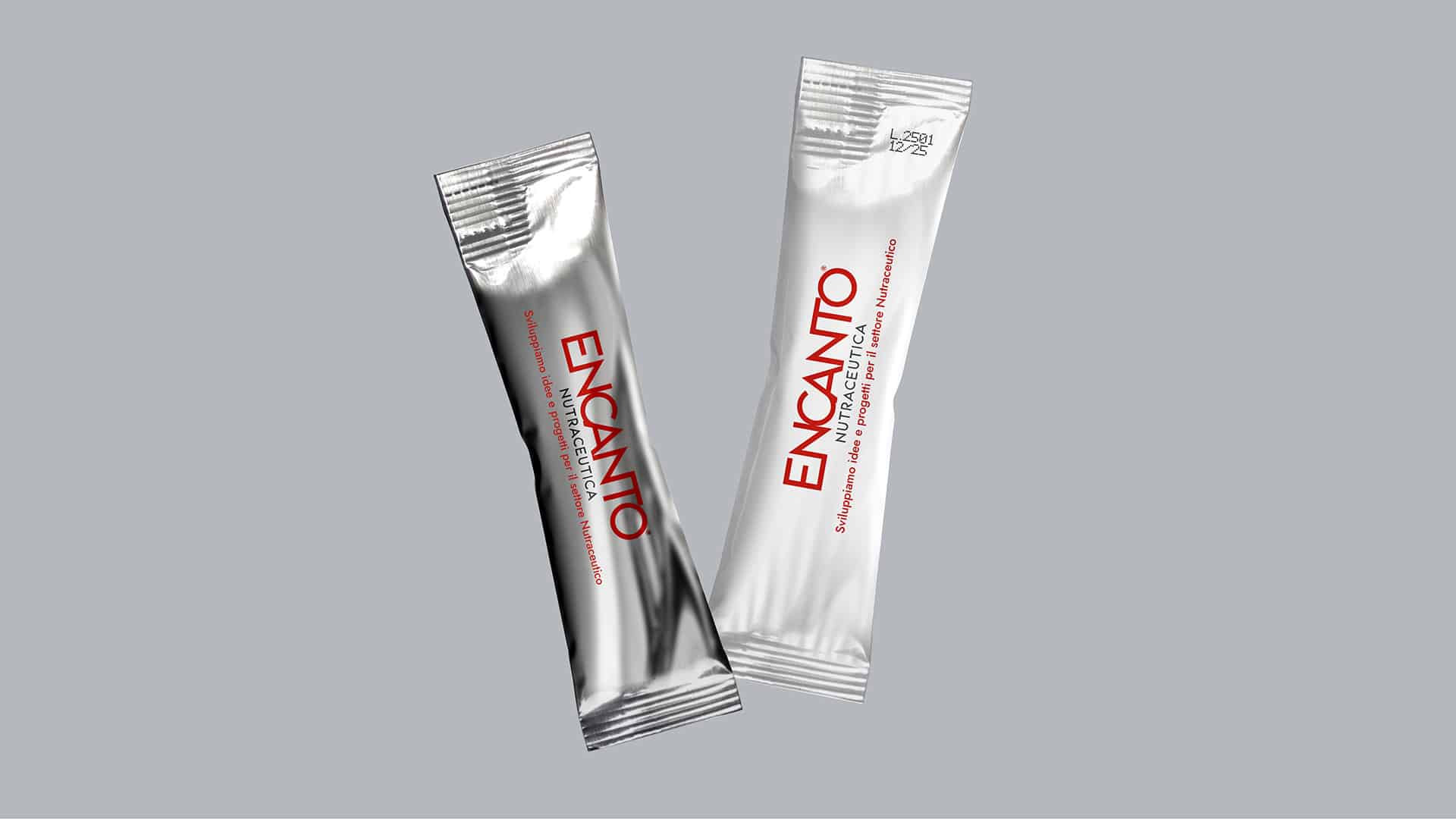
The Stick Pack is the fastest-growing nutraceutical format. Portability, single-serve portions, branding, and compliance: why more and more brand owners are choosing it to launch supplements.

Supplementary animal feeds are serious products. We treat them as such.
The packaging of supplements and complementary feed for pets takes place in a dedicated department, in compliance with EC Reg. 183/2005.

Menopause and Nutraceuticals: functional ingredients for each phase.
Menopause is a physiological transition, not a disease. Marine Collagen, Omega-7, Magnesium, Ashwagandha: the nutraceutical ingredients with the strongest evidence for each symptom.

Balsamic Vinegar of Modena PGI: what it means to package it
PGI is not a decorative label. For Balsamic Vinegar of Modena, every step-including packaging-meets precise rules and verifiable controls