

Vegan Supplements: why Certification matters more than Claim.
There was a time, not many years ago, when simply having Vegan on a label was enough to stand out. Today, that’s no longer the case — at least not on its own. Retail sales of plant-based foods in Italy exceeded 640 million euros in 2023, representing a 16% increase compared to 2021. And where there is market growth, there is a proliferation of claims. Consumers — and increasingly, buyers — have learned to distinguish between those who make claims and those who back them up.
In the dietary supplement industry, the issue is more complex than it seems. A supplement may contain ingredients of animal origin that aren’t immediately apparent on the label: gelatin in Capsules, Lanolin as a source of Vitamin D, Fish-Derived Omega-3 Fatty Acids, and Muscle-Derived Carnitine. Those who formulate these products know where to look. Consumers, however, often do not. And it is precisely in this gap—between the claim and verification — that the credibility of the vegan positioning in the Nutraceutical industry is at stake.
The difference between a Claim and a System
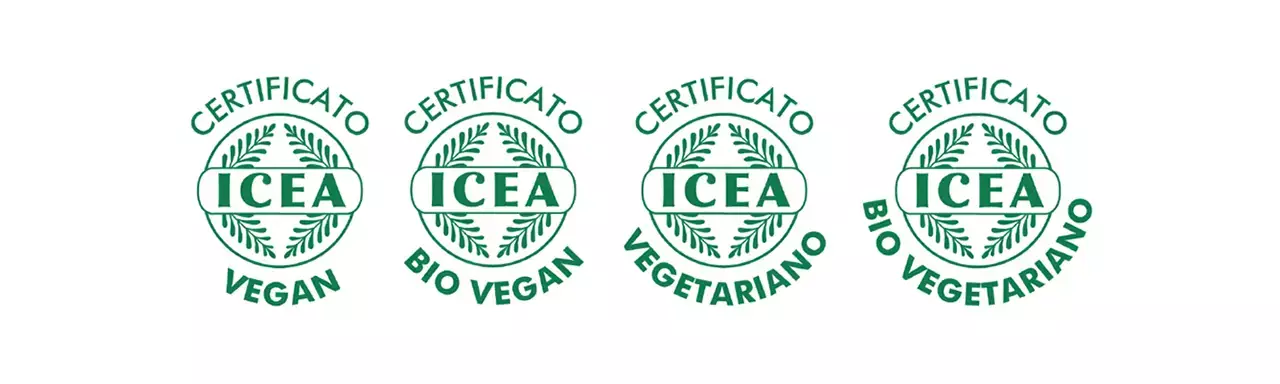
Anyone can write Vegan on a label: as of now, there is no EU regulation that reserves this term for products verified by a third-party organization. Third-party Vegan certification—issued by organizations such as ICEA, the Vegan Society, VEGANOK, and others—is what transforms this self-declaration into a verified commitment. The certifying body inspects the formula, verifies the origin of each ingredient, checks for potential cross-contamination risks on production lines, and issues a publicly available certificate.
It is not a regulatory requirement. It is a positioning choice. But in a market where consumer trust is an asset that is built slowly and lost quickly, certification is the most solid response to growing skepticism toward self-declared claims. Brands operating in the health and wellness segment that target consumers who value label transparency find that certification offers a tangible selling point—not just an abstract statement of values.




The technical challenges of Vegan formulation in the Nutraceutical Industry
Formulating a Vegan supplement doesn’t simply mean eliminating animal-derived ingredients — it means finding technically equivalent alternatives. Some are well-established and widely available; others require more careful development, with implications for stability, cost, and bioavailability.
Capsules are the best-known example. Gelatin — derived from bovine or porcine bones and cartilage — has been the standard for hard and soft capsules for decades. Plant-based alternatives, particularly Hydroxypropyl Methylcellulose (HPMC) and Pullulan, are now widely available and technically comparable for most applications. However, they require compatibility testing with the active ingredients they contain, particularly for formulations that are moisture-sensitive or require enteric release.
Vitamin D3 is another common technical challenge in vegan formulations. The most widely used form is traditionally derived from Lanolin, a fat found in Sheep’s Wool. Today, there are Algal sources of D3 — specifically from Lichens and certain Microalgae — that make it possible to retain the D3 form, which is more bioavailable than D2, within a completely plant-based context. The cost is generally higher, but for a product positioned in the Premium Vegan segment, this price difference is often justified.
Omega-3 EPA and DHA follow a similar logic. The conventional source is Bluefish Oil. Marine Microalgae — from which fish themselves bioaccumulate these Fatty Acids — are a primary alternative source, offering comparable nutritional profiles, lacking the typical fishy odor, and free from the risks of heavy metal contamination associated with fish-based sources. This solution is attracting growing interest even beyond the strictly vegan demographic.
The market: not a niche, but a direction
Data from the Italian market indicate that about 9.5% of Italians follow vegetarian or vegan diets. That’s millions of people—but they are not the ones determining the strategic importance of plant-based products in the nutraceutical sector. It is the much larger group of flexitarians — consumers who do not completely exclude animal products but consciously reduce their consumption — that drives sales volumes. In Italy and Germany, this group accounts for more than 59% of the population.
For those designing a dietary supplement, this means that choosing a plant-based approach doesn’t exclude any market — it expands it. A product formulated without animal ingredients and certified as such can be chosen by vegans, vegetarians, flexitarians, consumers with religious or cultural sensitivities regarding animal-derived ingredients, and simply by those who prefer transparency. The common denominator isn’t an ideology — it’s trust in the label.
Encanto Nutraeutical’s Mission
For us, plant-based isn’t just a trend to jump on—it’s the direction we’ve chosen to pursue. When selecting functional ingredients, we prioritize plant extracts, botanicals, and natural sources — not because it’s mandatory, but because it aligns with our approach to formulation quality. Vegan certification is one of the tools that makes this choice verifiable, not just a claim — and for those who develop a product with us, it’s an element that can be incorporated into the project right from the formulation stage.
The expiration of Green Claims
There is yet another reason why this distinction — between claiming and proving — is set to matter more than ever. Starting September 27, 2026, the new rules introduced in Italy by Legislative Decree 30/2026—which transposes the European directive against greenwashing by amending the Consumer Code — will limit the use of sustainability labels to those based on recognized certification systems and make generic and unverified claims subject to penalties. In this context, a certification issued by a third-party body ceases to be a mere marketing tool and becomes the foundation upon which a company’s positioning can stand up even before a regulatory authority: this is a topic to which we will dedicate a specific in-depth analysis very soon.
If you are developing a product in this segment and want to understand the available technical options, we would be happy to discuss this with you

Related Contents

Barrier Packaging: what actually protects a dietary supplement
Oxygen, light, and moisture degrade active ingredients before their expiration date. How materials and packaging act as barriers, and the issue of recyclability.

Sleep Supplements: the category consumers are evaluating
Sleep is the only category in which consumers evaluate the results using a number.

Packaging and Environmental Claims: Who is responsible for What
MASE has clarified the roles regarding PPWR: whoever applies the label is the manufacturer. The Green Claims regulations take effect on September 27. Here’s what to check now.

PPWR and Green Claims 2026: what’s changing for businesses
As of August 12, packaging is a regulated product; as of September 27, environmental claims must be substantiated. What will change with the PPWR and Green Claims in 2026.

Private Label vs White Label
Private Label and White Label are often confused. The difference lies in who develops the formula — and this affects the timeline, costs, and exclusivity of your product.
Stick Packs: When the Packaging Is Already Half the Product
The Stick Pack is the fastest-growing nutraceutical format. Portability, single-serve portions, branding, and compliance: why more and more brand owners are choosing it to launch supplements.

Supplementary animal feeds are serious products. We treat them as such.
The packaging of supplements and complementary feed for pets takes place in a dedicated department, in compliance with EC Reg. 183/2005.

Menopause and Nutraceuticals: functional ingredients for each phase.
Menopause is a physiological transition, not a disease. Marine Collagen, Omega-7, Magnesium, Ashwagandha: the nutraceutical ingredients with the strongest evidence for each symptom.

Adaptogens: the plants that help the body respond to stress
Adaptogens are botanicals that support psychophysical resilience by modulating the HPA axis. Ashwagandha, Gastrodia elata, Rhodiola: mechanisms, evidence, and applications in formulation.

Balsamic Vinegar of Modena PGI: what it means to package it
PGI is not a decorative label. For Balsamic Vinegar of Modena, every step-including packaging-meets precise rules and verifiable controls