

Private Label vs. White Label:the difference that makes all the difference for your product
“We’re looking for a manufacturer for our private label.” or “We want to launch a white-label product to test the market.” These two phrases are often used as if they were interchangeable — in emails from brand owners, in requests for quotes, and even in some manufacturers’ catalogs. They are not.
And the difference isn’t just about terminology: it determines who controls the formula, how much you can differentiate yourself from your direct competitors, how long it will take to get your product on the shelf, and whether the product you launch will be truly unique or just one of many with your label on it. It’s a distinction worth clarifying before choosing a co-packing partner—not after signing the contract. Here’s what truly sets the two models apart, point by point.
Private Labelvs. White Label:the difference that determinesyour product
“We’re looking for a manufacturer for our private label.” or “We want to launch a white-label product to test the market.” These two phrases are often used as if they were interchangeable — in emails from brand owners, in requests for quotes, and even in some manufacturers’ catalogs. They are not.
And the difference isn’t just about terminology: it determines who controls the formula, how much you can differentiate yourself from your direct competitors, how long it will take for your product to hit the shelves, and whether the product you launch will truly be unique or just one of many with your label on it.
It’s a distinction worth clarifying before choosing a co-packing partner — not after signing the contract. Here’s what really sets the two models apart, point by point.

White Label
The product already exists: the manufacturer determines the ingredients, dosages, and characteristics. The formula is available — often identical — across multiple brands at the same time. You apply your brand, your packaging, and your story.
Private Label
You specify what the product should contain: which ingredients, what dosages, and what form. The manufacturer creates the formula according to your specifications, and that formula remains exclusive: it will not be offered in identical form to other brands.
White Label
The product already exists: the manufacturer determines the ingredients, dosages, and characteristics. The formula is available — often identical — across multiple brands at the same time. You apply your brand, your packaging, and your story.
Private Label
You specify what the product should contain: which ingredients, what dosages, and what form. The manufacturer creates the formula according to your specifications, and that formula remains exclusive: it will not be offered in identical form to other brands.
White Label
The product already exists: the manufacturer determines the ingredients, dosages, and characteristics. The formula is available — often identical — across multiple brands at the same time. You apply your brand, your packaging, and your story.
Private Label
You specify what the product should contain: which ingredients, what dosages, and what form. The manufacturer creates the formula according to your specifications, and that formula remains exclusive: it will not be offered in identical form to other brands.
Who Specifies the Formula
The manufacturer. The formula was developed for the general public, not specifically for your brand.
Exclusivity
None. The same product, under different brand names, may also be sold by your direct competitors.
Customization
Limited to packaging, branding, and, in some cases, minor variations on the basic formula.
Who Specifies the Formula
The brand owner. You specify the ingredients, dosages, and desired mechanism of action; the manufacturer turns them into a formula.
Exclusivity
Exclusive. The formula developed for you is not replicated exactly for other brands.
Customization
Comprehensive. Ingredients, dosages, formulation, and mechanism of action are defined together, starting from scratch — or almost.
Who Specifies the Formula
The manufacturer. The formula was developed for the general public, not specifically for your brand.
Exclusivity
None. The same product, under different brand names, may also be sold by your direct competitors.
Customization
Limited to packaging, branding, and, in some cases, minor variations on the basic formula.
Who Specifies the Formula
The brand owner. You specify the ingredients, dosages, and desired mechanism of action; the manufacturer turns them into a formula.
Exclusivity
Exclusive. The formula developed for you is not replicated exactly for other brands.
Customization
Comprehensive. Ingredients, dosages, formulation, and mechanism of action are defined together, starting from scratch — or almost.
Who Specifies the Formula
With White Label, you are the manufacturer. The formula is designed for a general audience, not specifically for your brand.
In private label, you are the brand owner. You specify the ingredients, dosages, and desired mechanism of action; the manufacturer turns them into a formula.
Exclusivity
With White Label, none. The same product, under different brand names, can also be sold by your direct competitors.
With Private Label, however, it’s different. The formula developed for you isn’t replicated exactly for other brands.
Customization
In the White Label program, it is limited to packaging, branding, and, in some cases, minor variations on the base formula.
Extensive experience in private label products. Ingredients, dosages, formulation, and mechanism of action are defined collaboratively, starting from scratch—or nearly so.
Most real-world projects do not fall at either extreme, but somewhere in between—with a level of customization that often increases over time, as the brand establishes itself in the market.
Most real-world projects do not fall at either extreme, but somewhere in between—with a level of customization that often increases over time, as the brand establishes itself in the market.
Most real-world projects do not fall at either extreme, but somewhere in between—with a level of customization that often increases over time, as the brand establishes itself in the market.
Launch Timelines
Faster. The formula is already in place; the process focuses on packaging and branding.
Market Differentiation
That’s a tough one. Once you look past the packaging, the product is the same as the one on the shelf next to it.
Launch Timelines
Longer. The development, stability testing, and fine-tuning of the formula take time before production begins.
Market Differentiation
Tangible. The formula itself—not just the packaging—tells a story that no one else can tell in quite the same way.
Launch Timelines
Faster. The formula is already in place; the process focuses on packaging and branding.
Market Differentiation
That’s a tough one. Once you look past the packaging, the product is the same as the one on the shelf next to it.
Launch Timelines
Longer. The development, stability testing, and fine-tuning of the formula take time before production begins.
Market Differentiation
Tangible. The formula itself—not just the packaging—tells a story that no one else can tell in quite the same way.
Launch Timelines
Faster for White Label. The formula is already in place; the focus is on packaging and branding.
The process takes longer for private label products. Development, stability testing, and formula optimization all take time before production can begin.
MarketDifferentiation
With white label products, it’s difficult. Beneath the packaging, the product is the same as the one on the shelf next to it.
With Private Label, however, it’s all about substance. The formula itself—not just the packaging—tells a story that no one else can tell in quite the same way.
Neither model is "better" in an absolute sense: they correspond to different stages in a brand's life cycle. What matters is making an informed choice, knowing exactly what you're buying—a label on an existing product, or a product designed just for you.
Neither model is "better" in an absolute sense: they correspond to different stages in a brand's life cycle. What matters is making an informed choice, knowing exactly what you're buying—a label on an existing product, or a product designed just for you.
Neither model is "better" in an absolute sense: they correspond to different stages in a brand's life cycle. What matters is making an informed choice, knowing exactly what you're buying—a label on an existing product, or a product designed just for you.
Why the Market Is Shifting Toward Private Label
In its late-2024 report on smart nutrition trends, Mintel identified three key areas that brands in the nutrition sector must focus on to remain relevant: the growth of private label products, the shift toward plant-based options, and product customization. It’s no coincidence that these three go hand in hand: a brand that truly wants to stand out cannot do so by simply choosing from a catalog of generic formulas. It needs to specify, not just label.
Where does Encanto Nutraceutica fit in?
We work on both fronts, because both address legitimate needs. For those who want to enter the market quickly or validate a segment without going through the time-consuming process of full-scale development, Ready-to-Market formulations operate on a model similar to White Label: the formula already exists, has been tested, and is available for customization in terms of packaging and branding.
For those who already have a clear idea of which ingredient, dosage, and mechanism of action they want as the basis for their product, the customized development process is Private Label in the fullest sense of the term: you specify the details, and we formulate, develop, and manufacture the product according to your instructions.
If you’re trying to figure out which path is best for your project, let’s talk about it: the right choice depends on where you are today, not on which term sounds best in a presentation.
Why the Market Is Shifting Toward Private Label
In its late-2024 report on smart nutrition trends, Mintel identified three key areas that brands in the nutrition sector must focus on to remain relevant: the growth of private label products, the shift toward plant-based options, and product customization. It’s no coincidence that these three go hand in hand: a brand that truly wants to stand out cannot do so by simply choosing from a catalog of generic formulas. It needs to specify, not just label.
Where does Encanto Nutraceutica fit in?
We work on both fronts, because both address legitimate needs. For those who want to enter the market quickly or validate a segment without going through the time-consuming process of full-scale development, Ready-to-Market formulations operate on a model similar to White Label: the formula already exists, has been tested, and is available for customization in terms of packaging and branding.
For those who already have a clear idea of which ingredient, dosage, and mechanism of action they want as the basis for their product, the customized development process is Private Label in the fullest sense of the term: you specify the details, and we formulate, develop, and manufacture the product according to your instructions.
If you’re trying to figure out which path is best for your project, let’s talk about it: the right choice depends on where you are today, not on which term sounds best in a presentation.

Related Contents

Barrier Packaging: what actually protects a dietary supplement
Oxygen, light, and moisture degrade active ingredients before their expiration date. How materials and packaging act as barriers, and the issue of recyclability.

Sleep Supplements: the category consumers are evaluating
Sleep is the only category in which consumers evaluate the results using a number.

Packaging and Environmental Claims: Who is responsible for What
MASE has clarified the roles regarding PPWR: whoever applies the label is the manufacturer. The Green Claims regulations take effect on September 27. Here’s what to check now.
PPWR and Green Claims 2026: what’s changing for businesses
As of August 12, packaging is a regulated product; as of September 27, environmental claims must be substantiated. What will change with the PPWR and Green Claims in 2026.
Vegan Supplements: why Certification matters more than Claim
There was a time, not many years ago, when the word "Vegan” on a label was enough to set a product apart. Today, that’s no longer the case — at least not on its own.
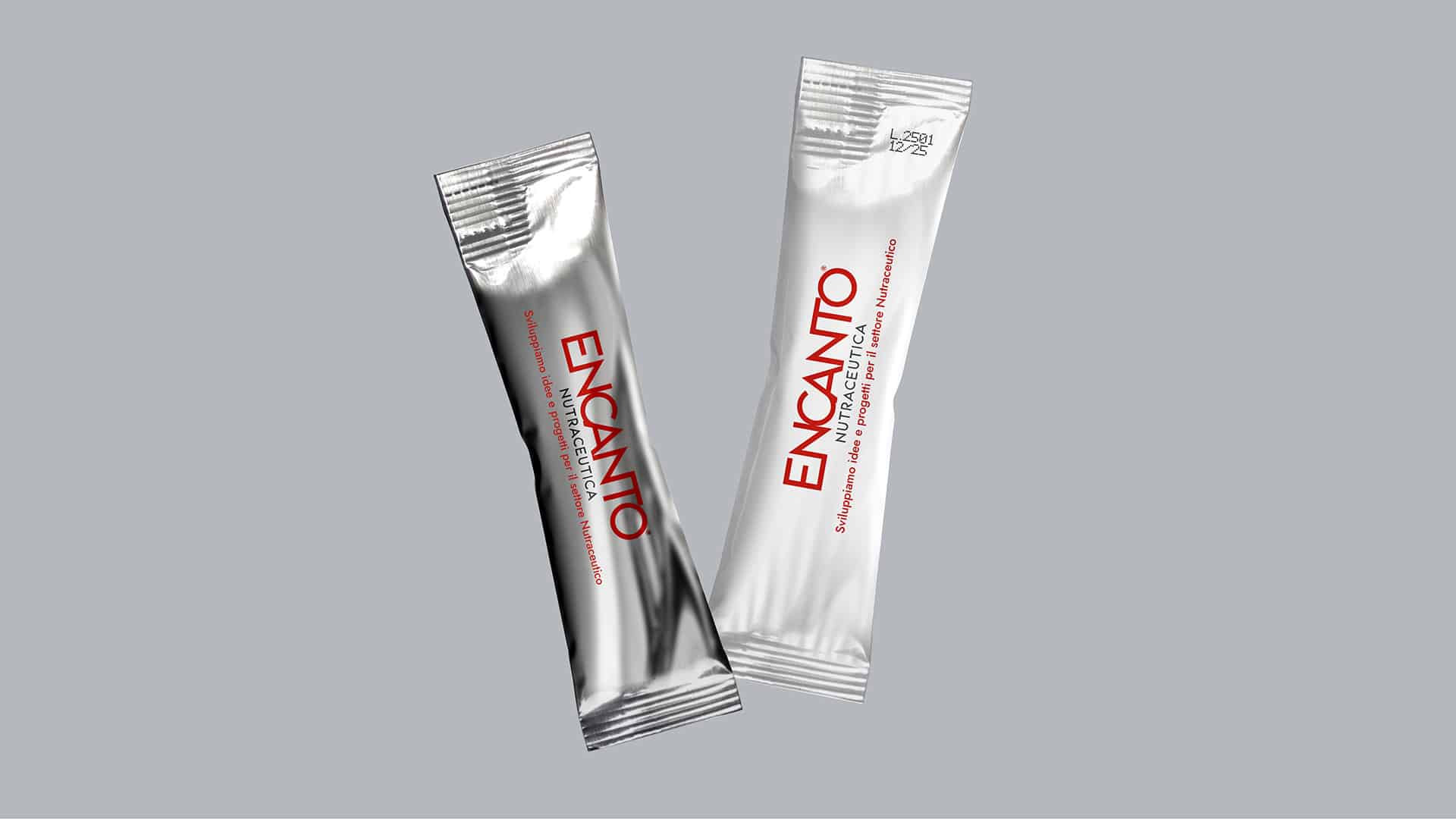
Stick Packs: When the Packaging Is Already Half the Product
The Stick Pack is the fastest-growing nutraceutical format. Portability, single-serve portions, branding, and compliance: why more and more brand owners are choosing it to launch supplements.

Supplementary animal feeds are serious products. We treat them as such.
The packaging of supplements and complementary feed for pets takes place in a dedicated department, in compliance with EC Reg. 183/2005.

Menopause and Nutraceuticals: functional ingredients for each phase.
Menopause is a physiological transition, not a disease. Marine Collagen, Omega-7, Magnesium, Ashwagandha: the nutraceutical ingredients with the strongest evidence for each symptom.

Adaptogens: the plants that help the body respond to stress
Adaptogens are botanicals that support psychophysical resilience by modulating the HPA axis. Ashwagandha, Gastrodia elata, Rhodiola: mechanisms, evidence, and applications in formulation.

Balsamic Vinegar of Modena PGI: what it means to package it
PGI is not a decorative label. For Balsamic Vinegar of Modena, every step-including packaging-meets precise rules and verifiable controls