

Organic in nutraceuticals: what really changes in the formula.
The European dietary supplement market is now worth more than 13 billion euros, and Italy is its main driver: with about 26 percent of continental sales, Italians are the largest consumers of supplements in Europe. A supremacy that tells of a mature and conscious relationship with supplementation – and which is reflected in an increasingly selective demand for quality and traceability of ingredients.
In this context, the word natural has gradually lost specific weight. It is found everywhere, applied to products that share little more than a label with nature. Organic, however, is another category: not an adjective, but a system of verifiable rules. And the difference, for those who formulate or commission a supplement, is far more relevant than it seems.


Encanto Nutraceutical is a certified operator to organic preparation and labeling of organic products.


Encanto Nutraceutical is a certified operator to organic preparation and labeling of organic products.
What does Organic really mean in a supplement
In Europe, organic production is regulated by EU Regulation 2018/848, which defines the rules for each stage of the supply chain: from the cultivation of raw materials to processing and the packaging of the finished product. For a plant ingredient intended for a supplement, being “organic” means coming from crops without synthetic pesticides, without chemical fertilizers, with farming practices that protect biodiversity and soil health.
But it is not enough to choose organic ingredients. The production process must also meet precise criteria: the excipients used in the formulation, the solvents used in the extracts, the packaging materials. A product in which only the main ingredient is organic and the rest is conventional cannot be certified “organic”– except for specific exceptions provided for in the standard and documented. EU Reg. 2018/848 does not allow for approximations.
Certification: an assurance tool, not a decorative label
Organic certification is issued by inspection bodies accredited and authorized by the Ministry of Agriculture. Several bodies operate in Italy – including ICEA, CCPB, CSQA Certificazioni, Suolo e Salute, Bioagricert, Bureau Veritas and others – all of which are supervised by ACCREDIA, the national accreditation body. The choice of inspection body is an operator’s decision, assessing the body’s specific expertise in its product sector and the needs of the target market.
The certification process involves documentary audits and physical on-site inspections at a minimum annual frequency. The certified operator receives a publicly verifiable identification code in the official European registers – traces.ec.europa.eu for EU organic. Anyone, consumer or buyer, can check the validity of the certificate. This public transparency is one of the elements that distinguishes organic certification from any other claim on the label: it is not claimed, it is verified.


Organic and plant-based: an elective affinity
In plant-based oriented nutraceuticals, organics find natural ground. Plant extracts-from botanicals to adaptogens, from fruit Polyphenols to functional plant oils – often have an organic variant available in the raw material market. And demand for these ingredients in certified form is growing among formulators who want to build a consistent product positioning from raw material to label.
It’s not just about marketing: some studies suggest that organically grown vegetables may exhibit phytochemical profiles richer in secondary compounds – particularly polyphenols and antioxidants – than their conventional counterparts, probably as a plant response to the absence of synthetic chemical protection. The topic is the subject of active research, and the picture is not yet definitive, but it is sufficient to justify the increasing attention of those formulating with a commodity quality perspective.
What concretely changes for the brand owner
For those commissioning the production of a supplement, working with a partner that operates under a certified organic regime means document simplification first and foremost: traceability is built into the certification system and does not have to be built from scratch with each batch. The operator’s certificate is a verifiable document that accompanies the product throughout the commercial chain – useful when listing with organized distribution buyers, e-commerce platforms, and the most demanding foreign markets on the transparency front.
It is worth noting that organic certification often accompanies other food quality and safety management systems – such as FSSC 22000, a standard recognized globally by the GFSI (Global Food Safety Initiative) and increasingly demanded by organized retail buyers as a precondition for supplier qualification. When an operator has both, the framework of guarantees it offers to the brand owner is substantially stronger: organic certification attests to the conformity of the raw material supply chain, FSSC 22000 certifies that the production system as a whole – processes, controls, traceability, risk management-is in compliance with international food safety standards.
However, it also means a practical constraint: not all functional ingredients have a certified organic version available on the market, and those that are available generally have a higher cost than their conventional counterparts. The choice to formulate organically therefore requires a clear positioning assessment-it is not an economically or communicatively neutral decision. It works when the product’s target audience recognizes and values it.
If you are considering a project in this area and want to understand whether organic is the right choice for your product, we are available to reason about it together.

Related Contents

Barrier Packaging: what actually protects a dietary supplement
Oxygen, light, and moisture degrade active ingredients before their expiration date. How materials and packaging act as barriers, and the issue of recyclability.

Sleep Supplements: the category consumers are evaluating
Sleep is the only category in which consumers evaluate the results using a number.

Packaging and Environmental Claims: Who is responsible for What
MASE has clarified the roles regarding PPWR: whoever applies the label is the manufacturer. The Green Claims regulations take effect on September 27. Here’s what to check now.
PPWR and Green Claims 2026: what’s changing for businesses
As of August 12, packaging is a regulated product; as of September 27, environmental claims must be substantiated. What will change with the PPWR and Green Claims in 2026.
Vegan Supplements: why Certification matters more than Claim
There was a time, not many years ago, when the word "Vegan” on a label was enough to set a product apart. Today, that’s no longer the case — at least not on its own.
Private Label vs White Label
Private Label and White Label are often confused. The difference lies in who develops the formula — and this affects the timeline, costs, and exclusivity of your product.
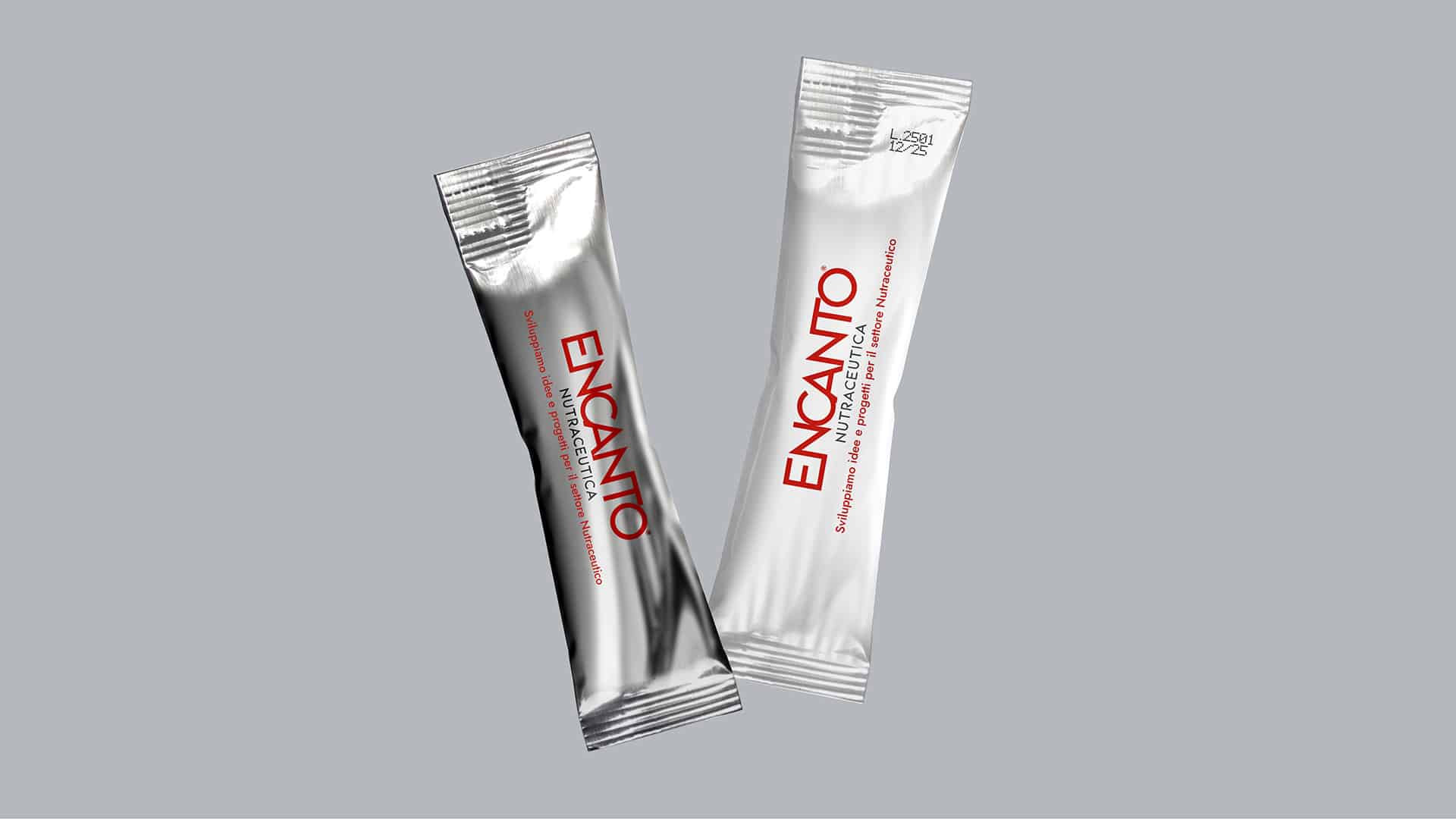
Stick Packs: When the Packaging Is Already Half the Product
The Stick Pack is the fastest-growing nutraceutical format. Portability, single-serve portions, branding, and compliance: why more and more brand owners are choosing it to launch supplements.

Supplementary animal feeds are serious products. We treat them as such.
The packaging of supplements and complementary feed for pets takes place in a dedicated department, in compliance with EC Reg. 183/2005.

Menopause and Nutraceuticals: functional ingredients for each phase.
Menopause is a physiological transition, not a disease. Marine Collagen, Omega-7, Magnesium, Ashwagandha: the nutraceutical ingredients with the strongest evidence for each symptom.

Adaptogens: the plants that help the body respond to stress
Adaptogens are botanicals that support psychophysical resilience by modulating the HPA axis. Ashwagandha, Gastrodia elata, Rhodiola: mechanisms, evidence, and applications in formulation.