

Barrier Packaging: what actually protects a dietary supplement
Packaging seems like the final decision for a product: the formula is ready, the format has been chosen — all that’s left is “the packaging.” In reality, package is a technical specification in every sense of the word, and it performs a task that isn’t immediately visible: determining whether the active ingredient you’ve included in the formula remains intact until the end of its shelf life, or whether some of it is lost along the way.
Because a supplement doesn’t just age on the shelf. It ages in interaction with its environment through its packaging, and three factors in particular work against its contents: oxygen, light, and moisture. Each group of ingredients is particularly vulnerable to one of these three.
Oxygen: oxidation
It is the enemy of ingredients that oxidize upon contact with air. Omega-3s become rancid, affecting the product’s smell, taste, and nutritional value. Vitamin C degrades. The same is true for many oils, Polyphenols, and Antioxidant compounds, which, by definition, react with oxygen. Here, the material’s barrier properties are measured by a specific index, the OTR — the amount of oxygen that passes through the film per unit of time: the lower the OTR, the better the packaging protects the contents.
Light: photodegradation
Some active ingredients degrade when exposed to light, particularly to ultraviolet radiation. This applies to Carotenoids and Lutein, Vitamin A, Riboflavin, and even Melatonin, which is photosensitive. A transparent container allows light to pass through completely: while this choice enhances the product’s appearance on the shelf, it comes at the cost of stability for light-sensitive active ingredients. An opaque material, amber glass, or a film with a light-blocking layer can make all the difference here.
Transparent packaging is often a marketing choice. For a light-sensitive product, this can cost it points in the ratings at the end of its shelf life: the product on the label is no longer the same as the one in the bag.
Humidity: the role of water
Moisture that enters the package triggers reactions, causes powders to clump, and leads to a loss of efficacy. This is a critical factor for Probiotics and Postbiotics — where the viability of the strains is key — as well as for Hygroscopic Powders, Effervescent Tablets, and Chewable forms. Here, too, there is an index — the WVTR — that measures how much water vapor passes through the material. And here, too, the container does not work alone: the cap, the seal, and any desiccant packet are all part of the barrier system.
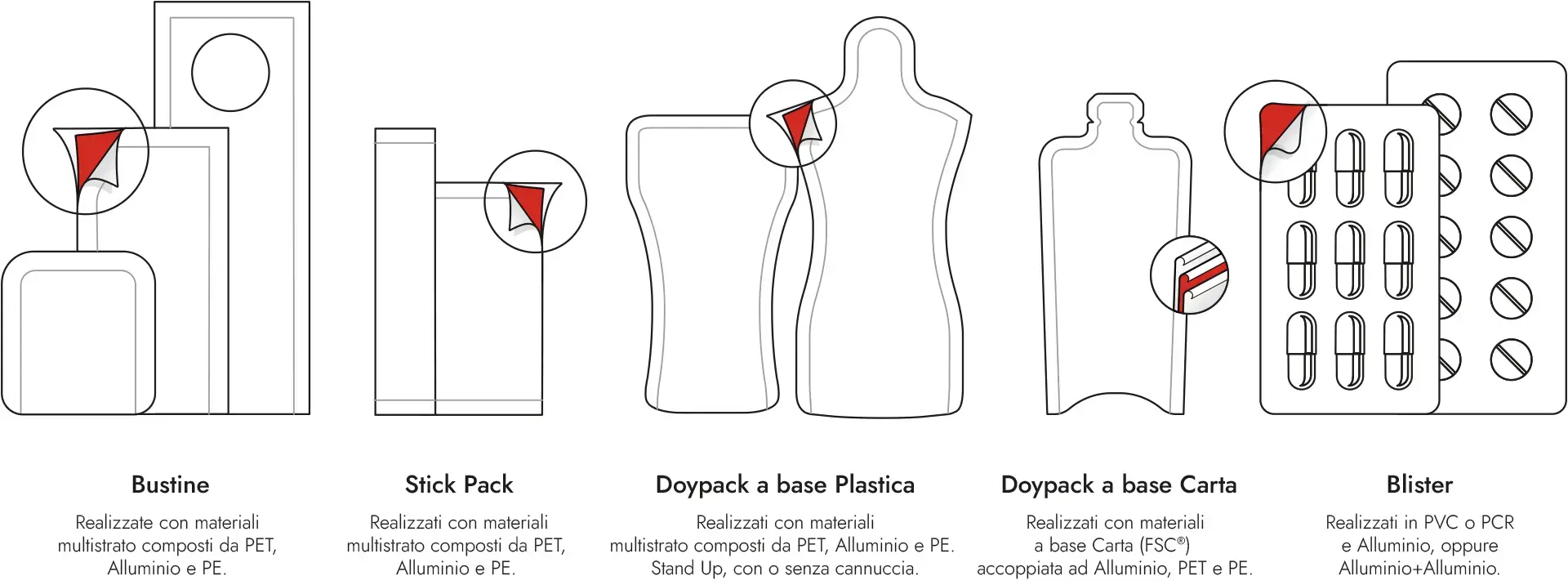
Sachets, Stick Packs, Doypacks (plastic- or paper-based), and Blister packs: the multilayer structure of each format, with Aluminum as one of the layers.
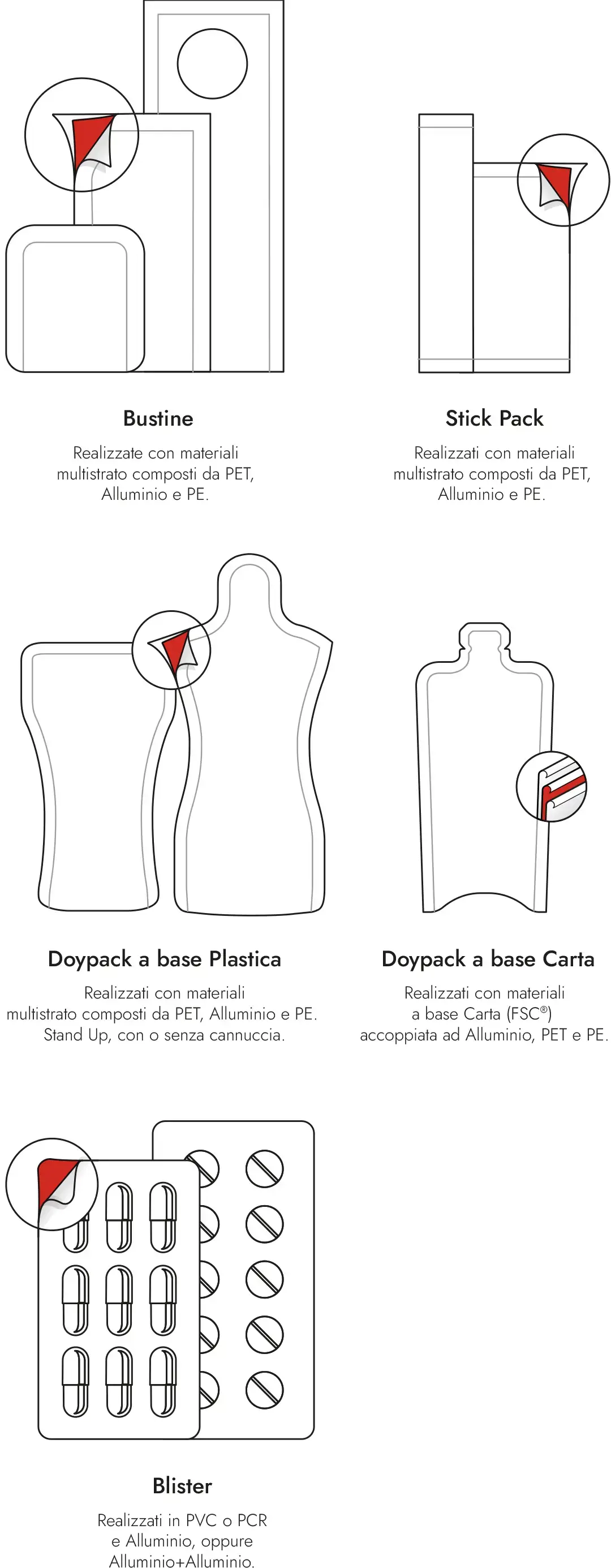
Sachets, Stick Packs, Doypacks (plastic- or paper-based), and Blister packs: the multilayer structure of each format, with Aluminum as one of the layers.
Materials, from the most protective to the most permeable
Aluminum provides a complete barrier: it blocks oxygen, light, and moisture all at once. That’s why Stick Packs, Doypack, and multilayer Pouche with aluminum foil — or ALU-ALU Blisters — are the formats that best protect sensitive active ingredients. When aluminum is not present — such as with a transparent film or a single-material plastic — the barrier performance decreases, and it must be verified that the active ingredient can still withstand this throughout the product’s shelf life.
However, the barrier is not the only criterion. The same aluminum-laminated multilayer film that provides the best protection is also the most difficult to recycle, because it combines different materials that must be separated at the end of its life. This is precisely the point emphasized by the new recyclability requirements: you can find an overview in our article on PPWR and Green Claims. Asset protection and material recyclability are two requirements that pull in opposite directions, and the right formulation lies at the point where they meet.
Sachets
Structure: PET-ALU-PE multilayer
Barrier: total — aluminum blocks oxygen, light, and moisture
Disposal: plastic recycling
Stick Packs
Structure: PET-ALU-PE multilayer
Barrier: total
Disposal: plastic recycling
Doypack plastic-based
Structure: PET-ALU-PE multilayer (or PET-ALU-PET-PE, with reinforcing PET)
Barrier: total
Format: stand-up, with or without a straw
Disposal: plastic recycling
Doypack paper based
Structure: FSC®-ALU-PE paper (or Paper-ALU-PET-PE)
Barrier: total — aluminum serves as the barrier layer, while paper is the outer layer
Disposal: paper recycling (paper constitutes the majority by weight)
Blister
Structure: PVC-ALU (PVC also available in PCR version, post-consumer recycled) or ALU-ALU (cold-formed)
Barrier: medium with PVC-ALU (the PVC cell acts as the barrier) · total with ALU-ALU
Disposal: plastic recycling
In all formats, the presence of aluminum distinguishes waste disposal from material recycling: “Disposable” does not mean “Recyclable.”
The format is part of the barrier
The same formula, when packaged differently, has a different shelf life. A single-dose packet sealed in aluminum isolates each individual dose from the environment until the moment of use; a bottle, on the other hand, exposes the contents every time it is opened, and this must be compensated for with proper sealing, filling, and sometimes a protective atmosphere. Choosing between a stick pack, Doypack, Blister pack, or bottle isn’t just a matter of convenience and shelf appeal—it’s a choice that determines the product’s barrier profile.
The barrier determines the maturity value at the end of the term, not at the time of packaging. An asset that is compliant at the outset but is not protected may no longer be protected by the stated maturity date.
This is an aspect directly linked to Bioavailability and dosage: it’s not just about how much active ingredient you include in the formula, but how much of it remains active when the product is taken. The same reasoning applies to ingredients that are most exposed to oxidative stress, where the packaging is just as much a part of the protection strategy as the formula itself.
A decision to be made in advance
The barrier cannot be corrected downstream, on a product that has already been defined. It is established during the development phase, along with the active ingredient and the format: we start by identifying what the ingredient is sensitive to — oxygen, light, or moisture — and from there, we determine the material and structure that will protect it throughout its shelf life, verifying the suppliers’ data on materials in contact with the product. Designing the packaging after finalizing the formula often means realizing too late that the formula actually required a different barrier.
If you’re developing a product and want to choose the material and format based on what the product needs to withstand, talk to us.

Related Contents
Sleep Supplements: the category consumers are evaluating
Sleep is the only category in which consumers evaluate the results using a number.

Packaging and Environmental Claims: Who is responsible for What
MASE has clarified the roles regarding PPWR: whoever applies the label is the manufacturer. The Green Claims regulations take effect on September 27. Here’s what to check now.
PPWR and Green Claims 2026: what’s changing for businesses
As of August 12, packaging is a regulated product; as of September 27, environmental claims must be substantiated. What will change with the PPWR and Green Claims in 2026.
Vegan Supplements: why Certification matters more than Claim
There was a time, not many years ago, when the word "Vegan” on a label was enough to set a product apart. Today, that’s no longer the case — at least not on its own.
Private Label vs White Label
Private Label and White Label are often confused. The difference lies in who develops the formula — and this affects the timeline, costs, and exclusivity of your product.
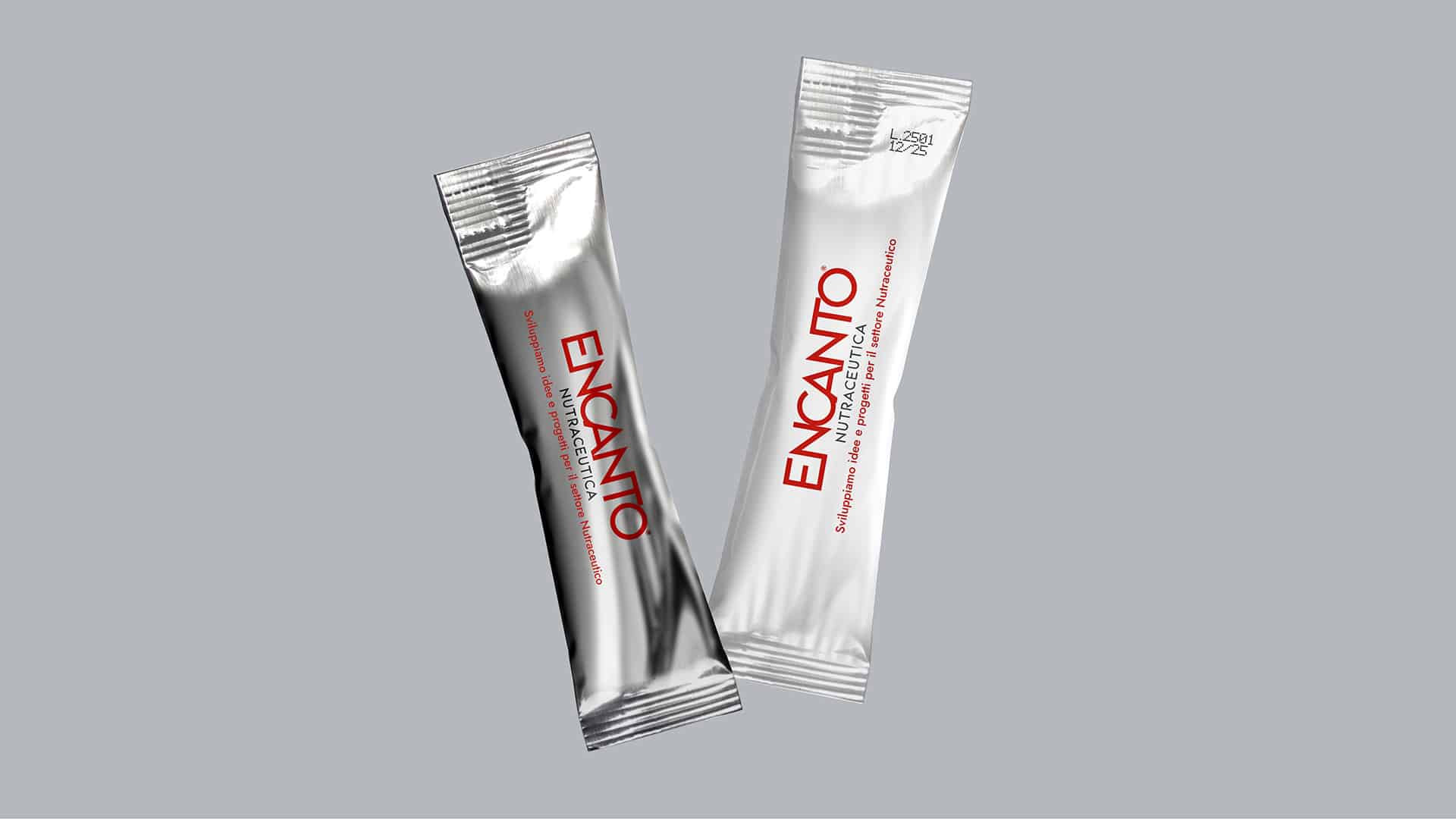
Stick Packs: When the Packaging Is Already Half the Product
The Stick Pack is the fastest-growing nutraceutical format. Portability, single-serve portions, branding, and compliance: why more and more brand owners are choosing it to launch supplements.

Supplementary animal feeds are serious products. We treat them as such.
The packaging of supplements and complementary feed for pets takes place in a dedicated department, in compliance with EC Reg. 183/2005.

Menopause and Nutraceuticals: functional ingredients for each phase.
Menopause is a physiological transition, not a disease. Marine Collagen, Omega-7, Magnesium, Ashwagandha: the nutraceutical ingredients with the strongest evidence for each symptom.

Adaptogens: the plants that help the body respond to stress
Adaptogens are botanicals that support psychophysical resilience by modulating the HPA axis. Ashwagandha, Gastrodia elata, Rhodiola: mechanisms, evidence, and applications in formulation.

Balsamic Vinegar of Modena PGI: what it means to package it
PGI is not a decorative label. For Balsamic Vinegar of Modena, every step-including packaging-meets precise rules and verifiable controls