

The 40g Gel: the Benchmark has been set. Producing it is another story.
Until a few years ago, the standard energy Gel contained 20–25 grams of Carbohydrates. Today, companies looking to position themselves in the high-performance segment must meet a different benchmark: 40 grams per Gel, with a Maltodextrin-to-Fructose ratio of 1:0.8. This is not a passing fad — it is a convergence of the science of intestinal absorption and the demands of elite athletes that has redefined what “reference Gel” means in the European market.
If you’re considering developing or marketing an energy Gel for the Endurance segment, starting with the Benchmark helps you understand what the market expects — and where there are still opportunities.
How Did We End Up at 40 g?
The shift from 20–25 g to 40 g is not arbitrary. It is a direct result of the change in the ratio of carbohydrate sources. The previous standard was built around Glucose as the almost exclusive Carbohydrate source: the intestine can absorb a maximum of around 60 g per hour, so the Carbohydrate content of each Gel had to remain relatively low to minimize gastrointestinal discomfort. The adoption of a 1:0.8 Maltodextrin-to-Fructose rato has changed this paradigm. By simultaneously utilizing the SGLT1 transporter for Glucose and the GLUT5 transporter for Fructose, total theoretical Carbohydrate absorption increases to 100–120 g per hour in well-adapted athletes. With this increased absorption capacity, 40 g of carbohydrates per Gel becomes a practical and effective dose rather than an excessive one.
The shift from 20–25 g to 40 g is not arbitrary. It is a direct result of the change in the ratio of carbohydrate sources.
The study by O’Brien et al. (2013), published in Medicine & Science in Sports & Exercise, documented an increase in the oxidation of exogenous Carbohydrates at a 0.8:1 ratio compared to lower ratios, accompanied by a reduction in symptoms of gastric fullness. Another formulation approach achieved 40 g per Gel using hydroGel technology, which encapsulates the Carbohydrates to minimize direct contact with the stomach. Two different paths toward the same goal: delivering 40 g of Carbohydrates to the intestine without causing any issues.
Two different approaches to achieving the same goal: delivering 40 g of Carbohydrates to the intestine without causing any problems.


What does 40 g Formula mean?
Increasing the carbohydrate content per Gel while maintaining the same volume isn’t just a matter of ratio. It involves a series of formulation decisions that affect the final quality of the product:
Osmolarity
Concentrating more Carbohydrates in a Gel increases the formula’s osmolarity. If the osmolarity is too high, it slows gastric emptying and increases the risk of osmotic water draw into the intestine — exactly the opposite effect of what is desired. The choice of ingredients matters: Maltodextrins have much lower osmolarity than Glucose or Fructose for the same caloric intake, which is why they are the standard source of Glucose. Cyclodextrins — cyclic carbohydrate chains — offer even lower osmolarity and represent one of the evolving trends in this segment.
High-Concentration Palatability
The perceived sweetness increases with concentration and as the race progresses. A Gel that tastes good at kilometer 5 can become cloying at kilometer 35. This isn’t just a sensory detail: it’s one of the main reasons why Gels aren’t consumed as prescribed during races, with direct consequences for performance. As Susan Kleiner noted at Vitafoods Europe 2026: “The fundamentals are still taste, texture, and mouthfeel. If an athlete doesn’t like a product, they won’t take it”. A recent trend addresses this very issue: unflavored Gels — 30g, 1:0.8 ratio — designed to eliminate sensory fatigue in ultra-events.
Viscosity and Formability
A 40 g Gel is necessarily thicker than a 20g one. Viscosity determines how easy it is to open and consume — a critical factor during strenuous activity, with sweaty hands, while running, or on a bike. The packaging format — Stick Pack, Shaped Sachet, tube — is not a decision separate from the formula: it is an integral part of the product experience.
Increasing the Carbohydrate content per Gel while maintaining the same volume isn’t just a matter of ratios. It involves a series of formulation decisions that affect the final quality of the product.
The european Regulatory Framework: what you can and cannot say
Companies that distribute Energy Gels in Europe need to be aware of regulatory developments regarding claims in this segment. In 2014, EFSA rejected the application for claims regarding “Carbohydrate solutions” for maintaining endurance performance — not due to a lack of scientific evidence, as Dr. Adam Carey, then president of the European Specialist Sports Nutrition Alliance (ESSNA), clarified at the time, but because of how the dossier had been structured.
In 2018, however, the situation changed: Specialized Nutrition Europe (SNE) resubmitted the dossier with evidence organized differently, and EFSA issued a positive opinion. Carbohydrate solutions may now bear claims of improved physical performance during high-intensity, long-duration exercise in healthy, trained adults — provided they deliver between 30 and 60 g of Carbohydrates per hour, up to 90 g/hour if Fructose constitutes about one-third of the mixture.
Today, manufacturers of Gels for the EU market therefore have two options for performance claims: the Carbohydrates+Electrolytes route (2011 claim: maintenance of endurance performance, with specific requirements for Sodium and Osmolarity) and the Carbohydrates-only route (2018 claim: improvement of performance during high-intensity, long-duration exercise). Adding Electrolytes to the formula remains a valid formulation choice — but it is no longer the only requirement for making a performance claim on the label. The lesson from 2014 remains relevant, however: in the EFSA review process, the quality of the dossier matters just as much as the quality of the science.


The 40 g is the benchmark. The opportunities for differentiation lie elsewhere.
While the figure of 40 grams per dose for high-performance Gels is now widely accepted, the market will diversify along other lines in the coming years. Some of these trends are already evident:
- Specific Segments — female endurance athletes, who have different gastric tolerance profiles than men and have historically been underserved; athletes over 50; athletes at high altitudes or in extreme thermal environments, where absorption and hydration needs change.
- Additional Features — electrolytes (which, in addition to their role in the formulation, also pave the way for the 2011 claim), caffeine, adaptogens, and ingredients for post-workout muscle recovery. The demand for “single-dose” products that serve multiple functions aligns with the profile of the modern athlete, who wants to simplify their competition supplementation strategy.
- Unflavored Formats — a neutral flavor offered as a premium option for those participating in events lasting more than four hours who want to separate the energy boost from the sensory experience.
- Integration with Biometric Data — CGM (continuous glucose monitoring) and wearables that make nutrition strategies more precise are already being used by elite athletes and are making their way into the amateur market. Product developers who design products with integration into these systems in mind are positioning themselves at the forefront of the next market trend.
The global market for Carbohydrate-based Energy Gels is valued at approximately $711 million in 2025 and is growing at a CAGR of 6.7% through 2033. It is not a niche market — but it is a market where formulation differentiation matters, because the commoditization of standard Gels is already underway.
If you’re considering developing a gel formula for the endurance segment—from choosing the ratio to the packaging format, and from the product claims to the packaging specifications — let’s discuss it before we start the project.

Related Contents

Carbo Gel 2:1: how Yamamoto launched the new Sport line with Encanto Nutraceutical, from formula to packaging.
Yamamoto entrusted Encanto Nutraceutical with the development of Carbo Gel 2:1 in a non-dispersible Doypack. The case study of the launch of the Sport line.

Carbohydrates and Endurance Sports: The Science is Well-Established. The Opportunities Not.
The scientific framework for Carbohydrate supplementation in endurance sports is well-established. The formulation options, however, are not: GI tolerance, personalization, and EFSA regulations.

Sport Nutrition 2026
According to FMCG Gurus, 93 percent of global consumers have purchased at least one sports nutrition product in the past six months. A figure that, at first glance, seems like good news for those in…
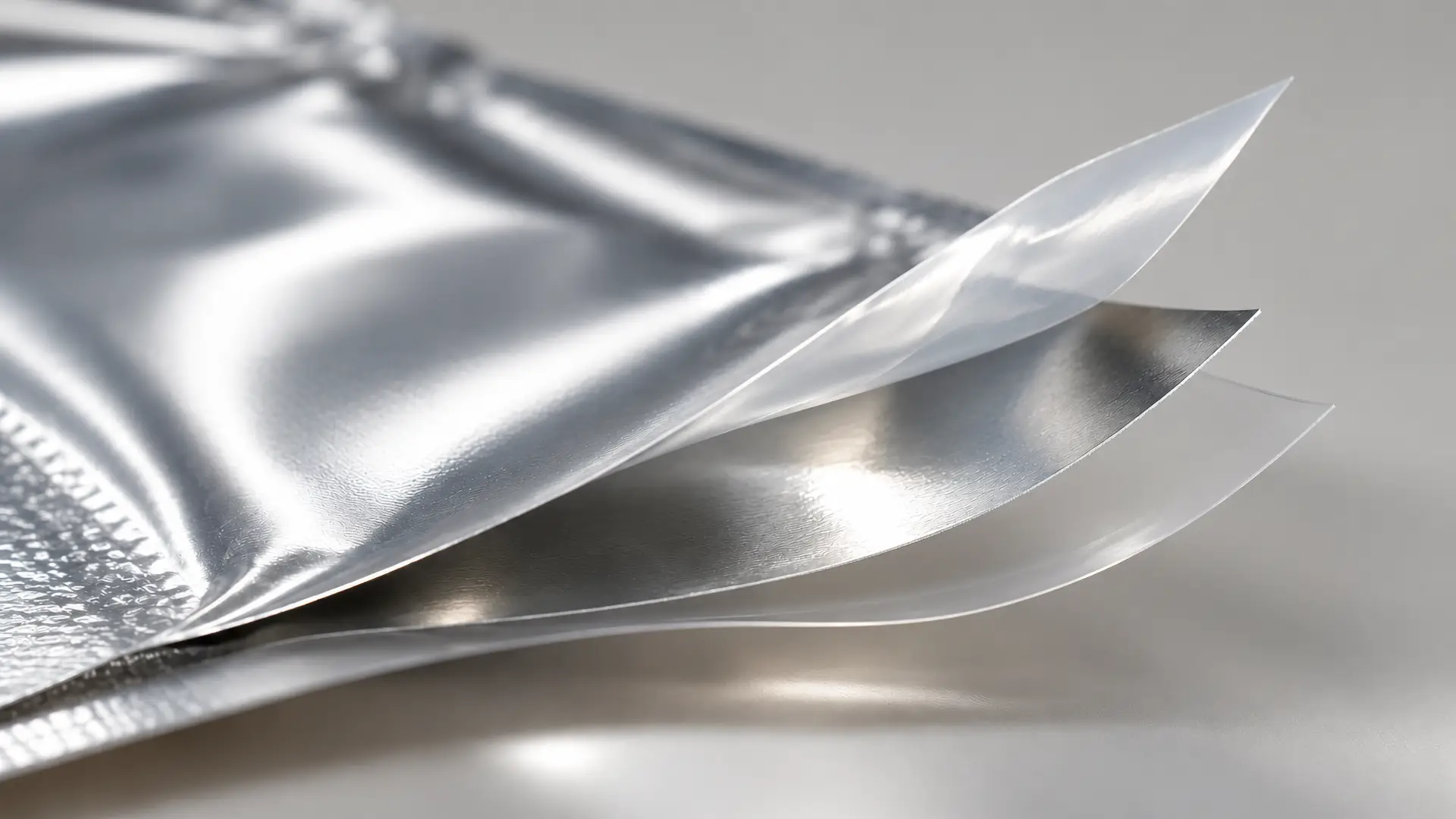
Barrier Packaging: what actually protects a dietary supplement
Oxygen, light, and moisture degrade active ingredients before their expiration date. How materials and packaging act as barriers, and the issue of recyclability.

Sleep Supplements: the category consumers are evaluating
Sleep is the only category in which consumers evaluate the results using a number.

Packaging and Environmental Claims: Who is responsible for What
MASE has clarified the roles regarding PPWR: whoever applies the label is the manufacturer. The Green Claims regulations take effect on September 27. Here’s what to check now.

Gourmet Glaze with Balsamic Vinegar of Modena PGI in a packet: how Acetum is bringing Mazzetti l’Originale to the US market.
Encanto packages Mazzetti l'Originale glaze in sachets and Aceto Balsamico di Modena IGP for Acetum. CSQA-certified co-packing, in the production area.