


Proactive or Reactive Approach?
In health terms, the Proactive or Reactive approach refers to how an individual manages his or her health and well-being.
If most people took a proactive approach to health, there could be various effects on the costs and economic resources of public and private health care.
Proactive
This approach involves preventive and anticipatory action to maintain and improve one's health. Instead of waiting for health problems to occur, people with a proactive approach adopt healthy habits, such as a balanced diet, regular exercise, regular medical checkups, sufficient rest and stress management.
Reactive
This approach involves addressing health problems only when they arise. The person's attention is focused on treating symptoms or conditions rather than preventing them. For example, someone with a reactive approach to health might not adopt healthy lifestyle habits or attend regular medical check-ups.


Proactive or Reactive Approach?
In health terms, the Proactive or Reactive approach refers to how an individual manages his or her health and well-being.
If most people took a proactive approach to health, there could be various effects on the costs and economic resources of public and private health care.
Proactive
This approach involves preventive and anticipatory action to maintain and improve one's health. Instead of waiting for health problems to occur, people with a proactive approach adopt healthy habits, such as a balanced diet, regular exercise, regular medical checkups, sufficient rest and stress management.
Reactive
This approach involves addressing health problems only when they arise. The person's attention is focused on treating symptoms or conditions rather than preventing them. For example, someone with a reactive approach to health might not adopt healthy lifestyle habits or attend regular medical check-ups.
The main goal of the proactive approach is to prevent illnesses and health issues, or at least to identify them in their early stages when they are easier to treat.
Savings for the individual
In addition to the benefits to health care in general, a proactive approach can also lead to personal savings. Individuals who maintain a healthy lifestyle may have less need for expensive medical care, may miss fewer days of work due to illness, and may live longer and healthier lives.
From a public health perspective, the proactive approach is generally considered better because it can prevent many chronic diseases and conditions, reduce long-term health care costs, and improve quality of life. However, it requires active engagement and awareness on the part of the individual, as well as adequate access to health education and preventive resources.
Long‑term cost reduction
Preventing a disease is generally less expensive than treating it, especially if the illness becomes chronic or severe. A healthier population can reduce the demand for expensive medical treatments, hospitalizations, surgeries and long-term medications.
Reduction of the burden on healthcare services
If fewer people suffer from chronic or serious illnesses thanks to healthier lifestyles, there could be less pressure on healthcare services. This could reduce waiting times and improve the quality of care for those in need of treatment.
Initial investment
Taking a proactive approach to health requires an initial investment in health education, prevention programs and screening. This may require a significant upfront expenditure of public and private health care resources.
Overall, although adopting a proactive approach requires initial investment and careful management to ensure equity, it is likely to lead to a healthier population and reduced health care costs in the long run.
Health disparities
A proactive approach may require regular access to health services, which may not be possible for all individuals, especially in areas with limited health resources or in disadvantaged populations. If not managed properly, this could potentially worsen existing health disparities.
The main goal of the proactive approach is to prevent illnesses and health issues, or at least to identify them in their early stages when they are easier to treat.
Savings for the individual
In addition to the benefits to health care in general, a proactive approach can also lead to personal savings. Individuals who maintain a healthy lifestyle may have less need for expensive medical care, may miss fewer days of work due to illness, and may live longer and healthier lives.
From a public health perspective, the proactive approach is generally considered better because it can prevent many chronic diseases and conditions, reduce long-term health care costs, and improve quality of life. However, it requires active engagement and awareness on the part of the individual, as well as adequate access to health education and preventive resources.
Long‑term cost reduction
Preventing a disease is generally less expensive than treating it, especially if the illness becomes chronic or severe. A healthier population can reduce the demand for expensive medical treatments, hospitalizations, surgeries and long-term medications.
Reduction of the burden on healthcare services
If fewer people suffer from chronic or serious illnesses thanks to healthier lifestyles, there could be less pressure on healthcare services. This could reduce waiting times and improve the quality of care for those in need of treatment.
Initial investment
Taking a proactive approach to health requires an initial investment in health education, prevention programs and screening. This may require a significant upfront expenditure of public and private health care resources.
Overall, although adopting a proactive approach requires initial investment and careful management to ensure equity, it is likely to lead to a healthier population and reduced health care costs in the long run.
Health disparities
A proactive approach may require regular access to health services, which may not be possible for all individuals, especially in areas with limited health resources or in disadvantaged populations. If not managed properly, this could potentially worsen existing health disparities.

Recent study on the economic and social value of Self-Care
A study on the economic and social value of self-medication in Europe, commissioned by the trade association AESGP (Association of the European self-medication industry) and published online on 22 May 2023 by the scientific journal Thieme: Gesundheit Ökon Quality management, in its conclusions it highlighted that every year across Europe, 1.2 billion cases of minor ailments are self-managed through the use of self-medication products such as medicines available without a prescription (also known as “OTC”), food supplements , including minerals and vitamins and personal care medical devices.
This saves over 36 billion euros in spending that would otherwise be borne by patients, national health systems and economies. Expanding personal care for minor ailments could save another €18 billion annually.
The study analyzes the current and possible contribution that self-medication products can make to the healthcare systems of 30 European countries (EU plus Norway, Switzerland and the United Kingdom). A simplified decision-analytic model was used to evaluate the self-purchase of non-prescription medicines and visits to general practitioners, with identification of the main direct and indirect costs.
Among the possible benefits of a more extensive use of this type of product underlined by the authors, there would also be a lesser need to resort to visits to general practitioners, who would thus be relieved of a workload and could better focus on handling more complex cases.
Bibliographic references and links to the scientific publication
Uwe May, Cosima Bauer, Anissa Schneider-Ziebe, Chiara Giulini-Limbach, “Self-Medication in Europe: Economic and Social Impact on Individuals and Society”, Thieme: Gesundheit ökon Quality management, 2023, DOI 10.1055/a-2089-5142:
https://www.thieme-connect.de/products/ejournals/pdf/10.1055/a-2089-5142.pdf

Recent study on the economic and social value of Self-Care
A study on the economic and social value of self-medication in Europe, commissioned by the trade association AESGP (Association of the European self-medication industry) and published online on 22 May 2023 by the scientific journal Thieme: Gesundheit Ökon Quality management, in its conclusions it highlighted that every year across Europe, 1.2 billion cases of minor ailments are self-managed through the use of self-medication products such as medicines available without a prescription (also known as “OTC”), food supplements , including minerals and vitamins and personal care medical devices.
This saves over 36 billion euros in spending that would otherwise be borne by patients, national health systems and economies. Expanding personal care for minor ailments could save another €18 billion annually.
The study analyzes the current and possible contribution that self-medication products can make to the healthcare systems of 30 European countries (EU plus Norway, Switzerland and the United Kingdom). A simplified decision-analytic model was used to evaluate the self-purchase of non-prescription medicines and visits to general practitioners, with identification of the main direct and indirect costs.
Among the possible benefits of a more extensive use of this type of product underlined by the authors, there would also be a lesser need to resort to visits to general practitioners, who would thus be relieved of a workload and could better focus on handling more complex cases.
Bibliographic references and links to the scientific publication
Uwe May, Cosima Bauer, Anissa Schneider-Ziebe, Chiara Giulini-Limbach, “Self-Medication in Europe: Economic and Social Impact on Individuals and Society”, Thieme: Gesundheit ökon Quality management, 2023, DOI 10.1055/a-2089-5142: Link

Related Contents

Barrier Packaging: what actually protects a dietary supplement
Oxygen, light, and moisture degrade active ingredients before their expiration date. How materials and packaging act as barriers, and the issue of recyclability.

Sleep Supplements: the category consumers are evaluating
Sleep is the only category in which consumers evaluate the results using a number.

Packaging and Environmental Claims: Who is responsible for What
MASE has clarified the roles regarding PPWR: whoever applies the label is the manufacturer. The Green Claims regulations take effect on September 27. Here’s what to check now.

PPWR and Green Claims 2026: what’s changing for businesses
As of August 12, packaging is a regulated product; as of September 27, environmental claims must be substantiated. What will change with the PPWR and Green Claims in 2026.

Vegan Supplements: why Certification matters more than Claim
There was a time, not many years ago, when the word "Vegan” on a label was enough to set a product apart. Today, that’s no longer the case — at least not on its own.
Private Label vs White Label
Private Label and White Label are often confused. The difference lies in who develops the formula — and this affects the timeline, costs, and exclusivity of your product.
Stick Packs: When the Packaging Is Already Half the Product
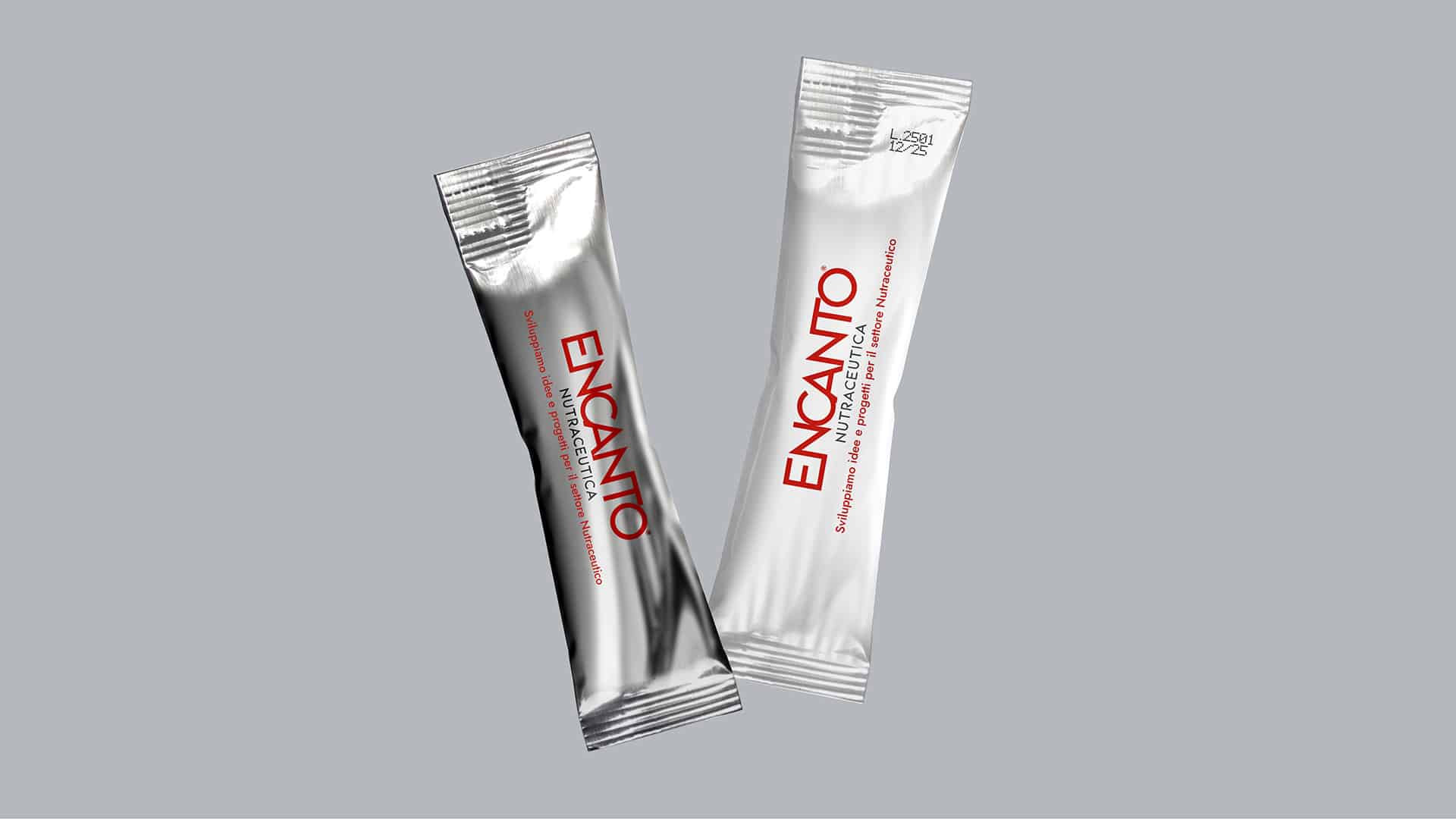
The Stick Pack is the fastest-growing nutraceutical format. Portability, single-serve portions, branding, and compliance: why more and more brand owners are choosing it to launch supplements.

Supplementary animal feeds are serious products. We treat them as such.
The packaging of supplements and complementary feed for pets takes place in a dedicated department, in compliance with EC Reg. 183/2005.

Menopause and Nutraceuticals: functional ingredients for each phase.
Menopause is a physiological transition, not a disease. Marine Collagen, Omega-7, Magnesium, Ashwagandha: the nutraceutical ingredients with the strongest evidence for each symptom.

Adaptogens: the plants that help the body respond to stress
Adaptogens are botanicals that support psychophysical resilience by modulating the HPA axis. Ashwagandha, Gastrodia elata, Rhodiola: mechanisms, evidence, and applications in formulation.